Useful Terraform Tools in 2026
DevOps teams don’t fail due to bad code. They fail because their infrastructure can’t keep up.
As businesses start scaling across multi-cloud environments, even Terraform starts showing issues.
The good news? You don’t need to replace Terraform, but combine it with seven battle-tested tools to eliminate bottlenecks, streamline collaboration, and build a DevOps workflow that actually scales.
Read on to explore which Terraform tools will help your business scale and how partnering with a DevOps services company can help your business keep afloat.
What is Terraform?
Terraform is an open-source infrastructure-as-code tool created by HashiCorp. It enables developers to update and destroy on-premises and cloud infrastructure components by writing it in human-readable configuration files.
It manages low-level components like compute, storage, and networking resources, as well as high-level components like DNS entries and SaaS features.
But how does it work? Terraform creates and manages resources on cloud platforms and other services through their application programming interfaces (APIs). This lets providers work with virtually any platform or service with an accessible API.

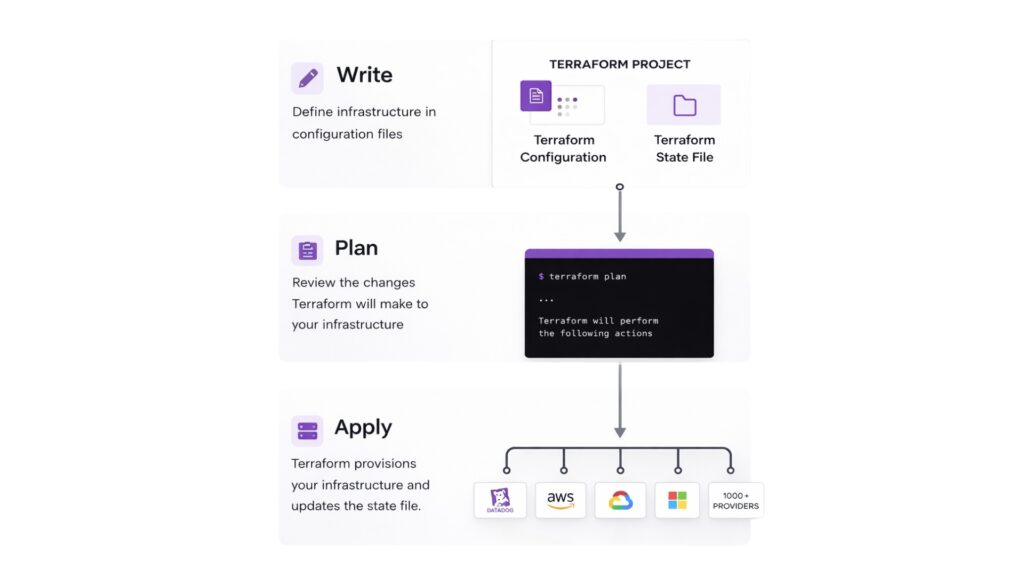
Its main workflows consist of three stages:
Write: Define infrastructure in configuration files.
Plan: Review the changes Terraform makes to your infrastructure
Apply: Terraform provisions infrastructure and updates the state file
Top Terraform Tools to Use in 2026
The best strategy combines Terraform with the following tools to ensure compliance, security, and operational efficiency.
CI/CD Tools
Atlantis: A great open-source project for pull-request automation. This allows teams to run Terraform commands directly via PR comments, helping peers review before any infrastructure change happens.
HashiCorp Cloud Platform: Like Atlantis, HCP manages Terraform deployments triggered by commits to your VCS. Combined with excellent state management features, HCP allows the deployment pipeline to be customized. It manages variables, secrets, resources, and more. Other than this, it also allows you to script it in Terraform, so everything can be automated.
Digger: An open-source alternative to Terraform Cloud, it runs with one’s existing CI/CD system to provide state locking and plan previous with a third-party involvement.
Native Tools
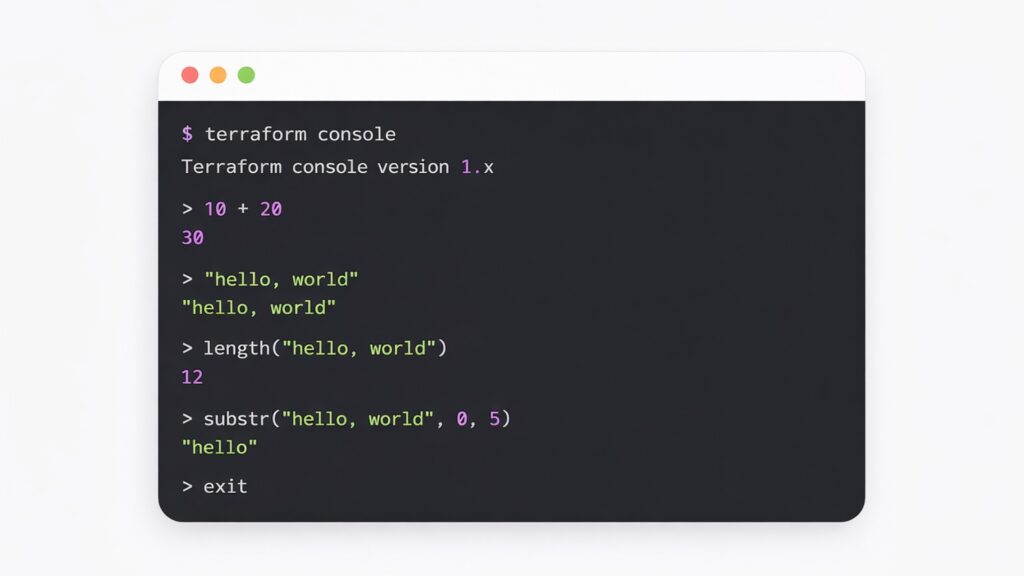
Terraform Console: Probably an overlooked tool, Terraform Console provides an interactive console that can be used to test and evaluate any Terraform expressions you may wish to use in your code. This means no need for endless experimenting, writing awkward outputs, and banging your head against the desk to test complicated expressions before running one's code.
Let’s understand the above with an example:
Linting Tool
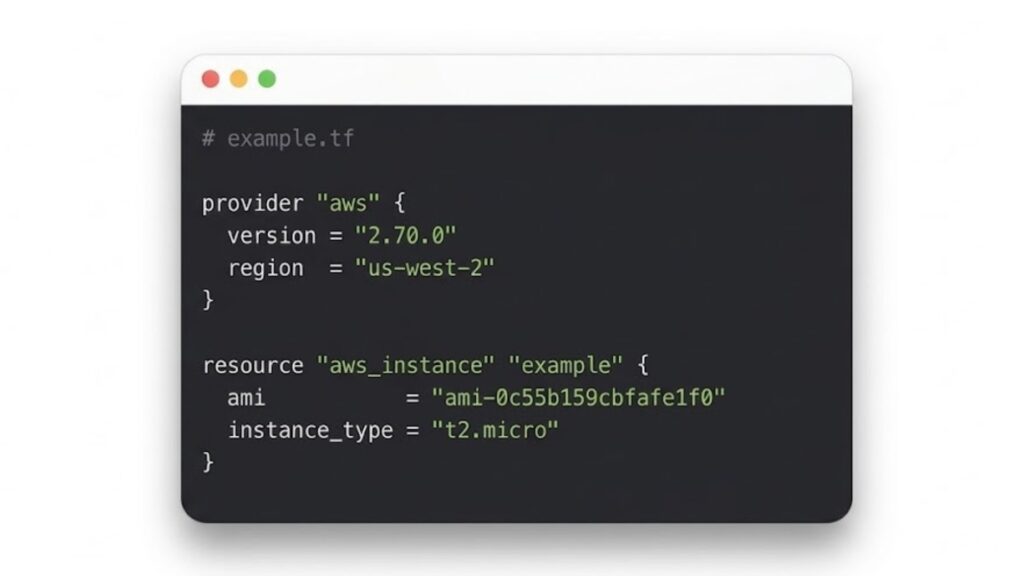
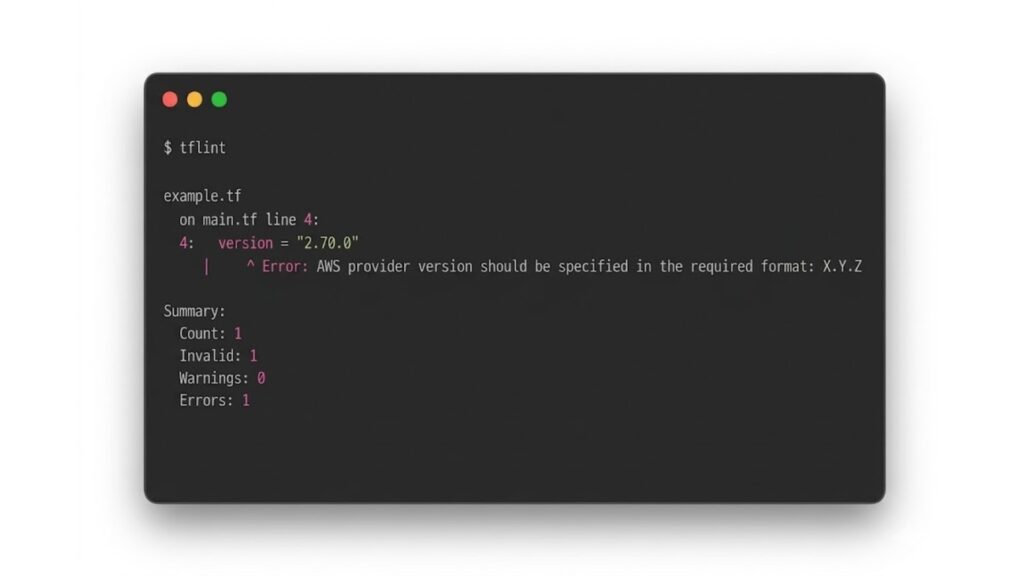
TFLint: A useful Terraform framework that lets you lint your Terraform code based on a prewritten ruleset or your own custom rules. Rules are added using “plugins.”
Some common issues one might face while using TFLint are:
finding errors, such as invalid instance types, for the major cloud providers, including AWS, GCP, and Azure.
deprecated syntax and unused declarations.
Let’s check an example to understand this better:
Security Tools
Open Policy Agent: Also called OPA, this is written in Rego language, which is inspired by the old Datalog language. OPA is used by tools ranging from Terrascan to Spacelift and HCP Terraform. This means from the time a user logs in to Spacelift to the point where they’re launching stacks, OPA policies are there, ensuring everything goes smoothly.
Checkov: Similar to Terrascan, but it uses a Python policy-as-code framework instead of the Rego syntax found in OPA. This makes it more reliable for engineers, as Python is one of the most popular programming languages today.
Costing Tool
Infracost: Probably one of the most popular tools used with Terraform in production deployments; this tool provides a cost based on what you plan to deploy. And the best thing- it not only shows you what it’s going to cost, but also writes policies that can block a deployment based on the cost. CI/CD tools, such as Spacelift, can easily add tools like this into the deployment pipeline with very little configuration.
HCL Generation Tools
Pike: An interesting tool that analyzes the resources you wish to create using Terraform and generates the necessary IAM permissions you need to complete that deployment.
Yor: Not an HCL generation tool, but adds informative and consistent tags across IaC tools. It automatically adds tags to Terraform, CloudFormation, and serverless frameworks. Other than this, it creates unique tags for your IaC resource code blocks, making it easier to trace code blocks to their respective cloud-provisioned resources without touching sensitive data such as plan or state files.
Document Generation Tool
Terraform Docs: Writing documentation isn’t everyone’s cup of tea. Luckily, with Terraform docs, engineers can automatically generate them from configuration files. This extremely simple and easy-to-use tool shows exactly what one's users need to know. It exposes variables you can add to a template file, and it will automatically generate the sections for you in an easy-to-read format.
Terraform for DevOps Strategy
Infrastructure automation is a function required by every DevOps team. The selection of the right tool usually depends on cost, skillset, and functionality.
Now that you’ve had a quick run through, it is safe to say that Terraform is the best choice.
And why not? Its capability to manage infrastructure in DevOps enhances efficiency and improves the implementation of DevOps.
At Spiral Mantra, a leading DevOps consulting company, we help teams evaluate the full potential of tools like Terraform to set up and scale DevOps systems.
Commonly Asked Questions
What is the reason for choosing Terraform for DevOps?
How to use Terraform to become a DevOps engineer?
What are the best DevOps tools & technologies in 2026?
How can my business benefit from Terraform?
IaC tools like Terraform allow teams to automate, manage, and provision infrastructure using declarative configuration files. This is helpful in better state management and better deployment workflows.
Terraform alone won't make you a DevOps engineer. But understanding what it does will help you create servers, databases, and automate environments. You can pair up your Terraform knowledge by appearing for the Terraform Associate exam.
The year 2026 is all about automation, containerization, and security. The top tool choices are GitLab/GitHub (CI/CD), Docker (containers), Kubernetes (orchestration), Terraform (IaC), and Ansible (configuration management)
Terraform can help your business manage infrastructure. But for this, you need to partner with the right DevOps consulting services provider who can help your team move faster, reduce risk, and build scalable systems.